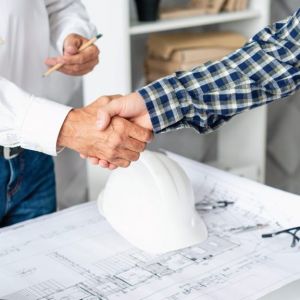
Proper Design Keeps Employees Safer & Makes Companies More Successful!
Design fascinates me. Companies open new, beautiful hotels, install multi-million dollar production lines, or spend millions on office furniture and accessories, yet […]
Design fascinates me. Companies open new, beautiful hotels, install multi-million dollar production lines, or spend millions on office furniture and accessories, yet do not engage Ergonomists like me in the design phase. Then they wonder why the rooms aren’t properly cleaned, production and maintenance employees are getting hurt, and office employees don’t use the full capabilities of their furniture and accessories.
Every day on LinkedIn, it seems like a new example pops up. A company proudly announces a new property, office, or operation, and posts a picture of it, and I immediately find opportunities that were missed to make jobs easier, employees safer, and companies more profitable.
Process designers, facility planners, and interior designers may claim they “know” ergonomics, but do they really? I’ve worked with engineers at top automotive companies that had only a limited knowledge of the science. I have worked with facilities planners who did not follow ergonomics best practices. I worked with an interior designer on a massive project who recommended absolute garbage to their client, and who then threw a literal temper tantrum when I challenged them on the science. True story.
If you have ever heard of ISO 45001, the focus is on safety management systems and Prevention through Design, or PtD. But unfortunately, I see many instances where people want to appear “indispensable,” claim they know more than they do, and then something gets bungled. A former neighbor once needed a simple medical procedure, but the doctor was absent. So the assistant did it. Our neighbor had massive, life-threatening complications. Because someone got in over their heads. You don’t call a plumber to fix an electrical issue.
When something is designed without consideration for the employees who use, operate, maintain or clean it, then someone is playing with other peoples’ lives. That bothers me.
The most efficient–and effective–use of resources is during the design and development process of something new. You can build it into the budget. Don’t claim to have “stayed at Holiday Inn Express last night.” Call in the subject matter experts. You’ll be glad you did!
To provide the best experiences, we use technologies like cookies to store and/or access device information. Consenting to these technologies will allow us to process data such as browsing behavior or unique IDs on this site. Not consenting or withdrawing consent, may adversely affect certain features and functions.
Functional
Always active
The technical storage or access is strictly necessary for the legitimate purpose of enabling the use of a specific service explicitly requested by the subscriber or user, or for the sole purpose of carrying out the transmission of a communication over an electronic communications network.
Preferences
The technical storage or access is necessary for the legitimate purpose of storing preferences that are not requested by the subscriber or user.
Statistics
The technical storage or access that is used exclusively for statistical purposes.The technical storage or access that is used exclusively for anonymous statistical purposes. Without a subpoena, voluntary compliance on the part of your Internet Service Provider, or additional records from a third party, information stored or retrieved for this purpose alone cannot usually be used to identify you.
Marketing
The technical storage or access is required to create user profiles to send advertising, or to track the user on a website or across several websites for similar marketing purposes.